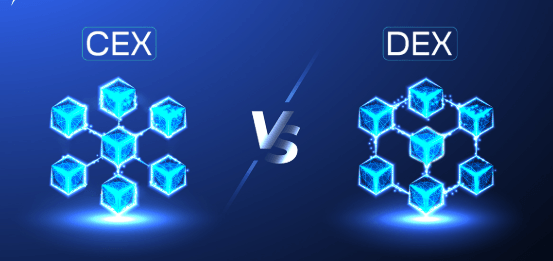
Decentralized exchanges operate without a central custodian, using smart contracts to automate trades and custody. Liquidity pools fund markets, with providers earning fees from activity. Automated market makers price trades by predefined algorithms, while on-chain settlement completes within blocks. Cross-chain bridges extend reach, yet security hinges on contract design and oracle integrity. The framework emphasizes transparency and programmable rules, reducing counterparty risk but introducing complexity. The mechanism invites closer inspection of safeguards and potential failure modes.
What Is a DEX and How It Differs From Centralized Exchanges?
A decentralized exchange (DEX) is a platform that enables peer-to-peer trading of digital assets without a central intermediary controlling user funds or custody.
It contrasts with centralized exchanges by eliminating a single custodian and relying on automated protocols.
It discusses exchange fees and regulatory compliance through on-chain enforcement, reducing counterparty risk while increasing transparency and user ownership.
How Smart Contracts and Liquidity Pools Power Trading
Smart contracts automate the execution of trades and settlement by encoding rules directly into programmable agreements, eliminating reliance on trusted intermediaries. In decentralized exchanges, liquidity pools provide capital for trading pairs, with automated pricing via predefined algorithms. Participants contribute and withdraw liquidity, earning fees.
The system facilitates demand response participation and price signals within energy markets, aligning incentives through transparent, lossless settlement and peer-assisted risk sharing.
What Are Automated Market Makers and On-Chain Settlement?
Automated Market Makers (AMMs) are on-chain mechanisms that generate liquidity and determine asset prices algorithmically, removing the need for traditional order books. They implement dynamic pricing via mathematical formulas, enabling automated swaps without counterparties. On-chain settlement finalizes trades within blocks. Considerations include cross chain bridges for token transfers and liquidity migration, while slippage and fee structures influence efficiency and capital allocation.
How to Evaluate, Use, and Troubleshoot a DEX Safely?
Evaluating, using, and troubleshooting a decentralized exchange (DEX) safely requires a structured, risk-aware approach: assess the protocol’s design, security posture, and governance; verify the liquidity sources, slippage behavior, and fee mechanics; and implement rigorous operational checks to minimize exposure to common failures such as front-running, price oracle issues, and liquidity fragmentation.
Security wallets and staking mechanisms warrant explicit, separate verification within risk models.
See also: Space Technology and Innovation
Conclusion
DEXs replace trusted intermediaries with code, liquidity, and on-chain rules. Smart contracts lock pools, automate trades, and settle them within blocks, while AMMs price assets via liquidity-weighted equations. Users earn fees by contributing capital, and transparent mechanics reduce counterparty risk—though impermanent loss and operational pitfalls remain. In sum, DEXs are programmable, edge-to-edge markets where trust shifts from institutions to code, data, and disciplined due diligence. Caution and testing remain essential for safe participation.